

Last updated October 30, 2026
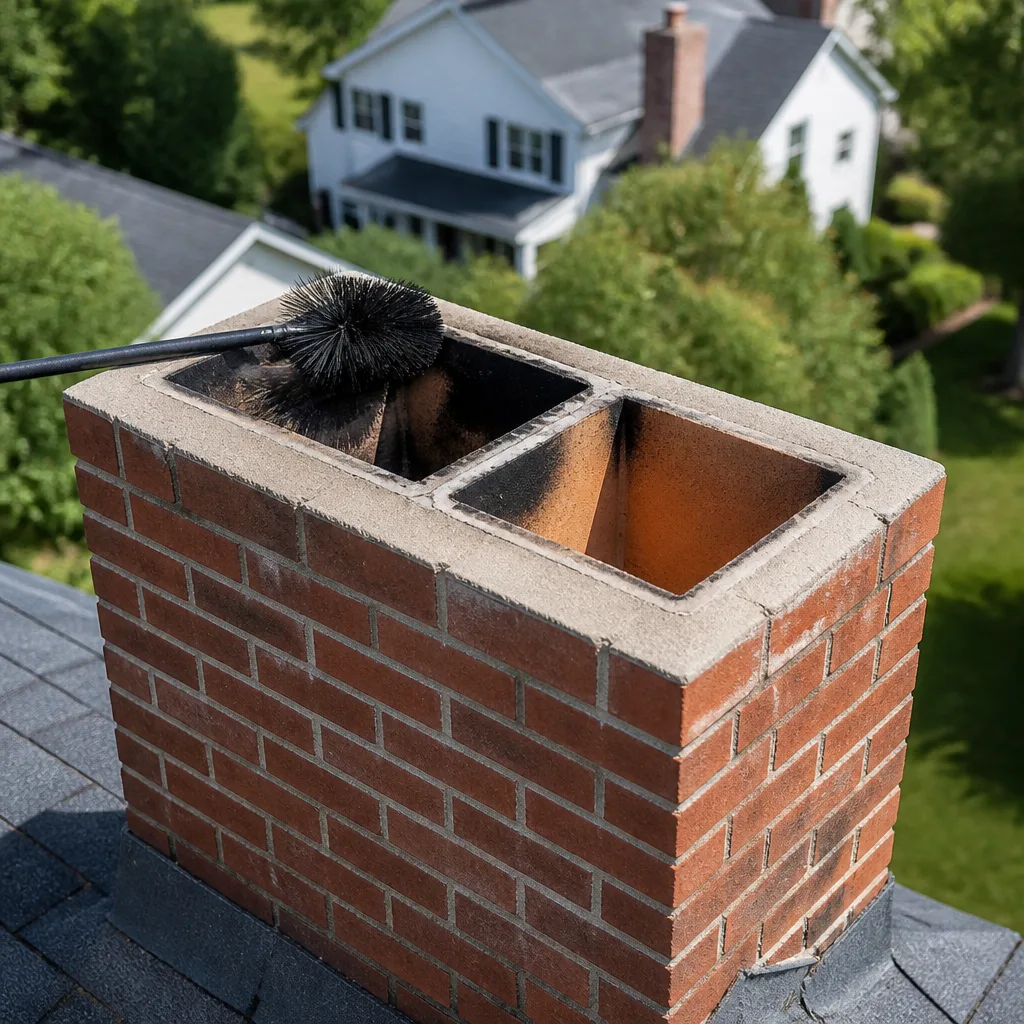 Sweep & inspection
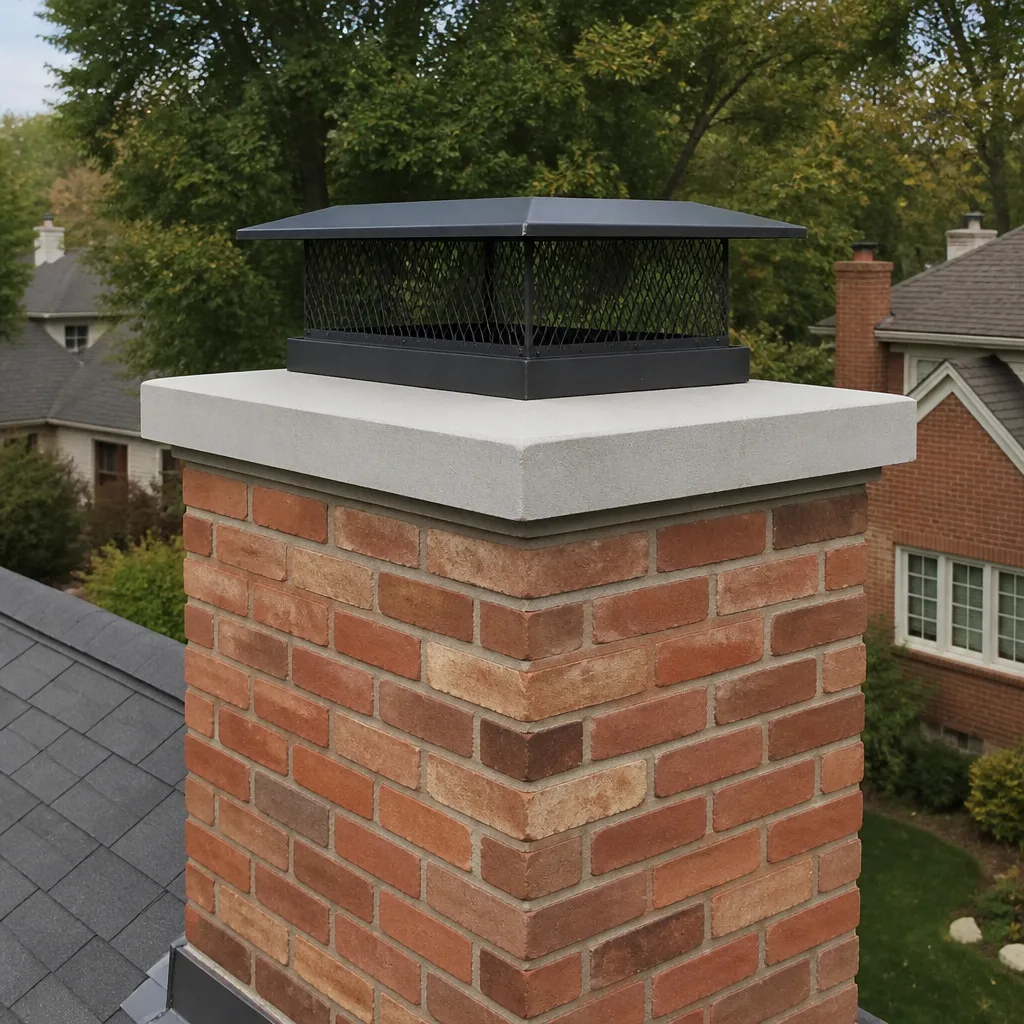 Caps & crowns
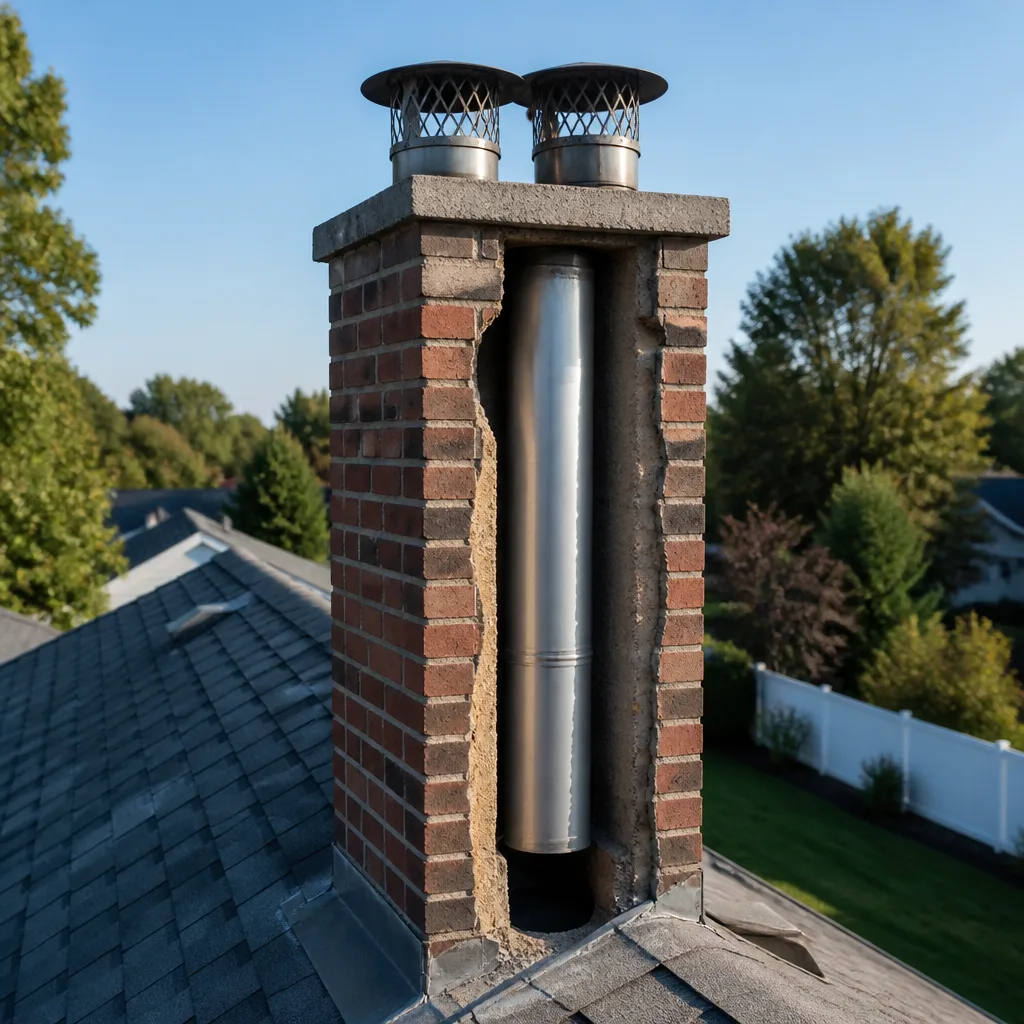 Flue relining
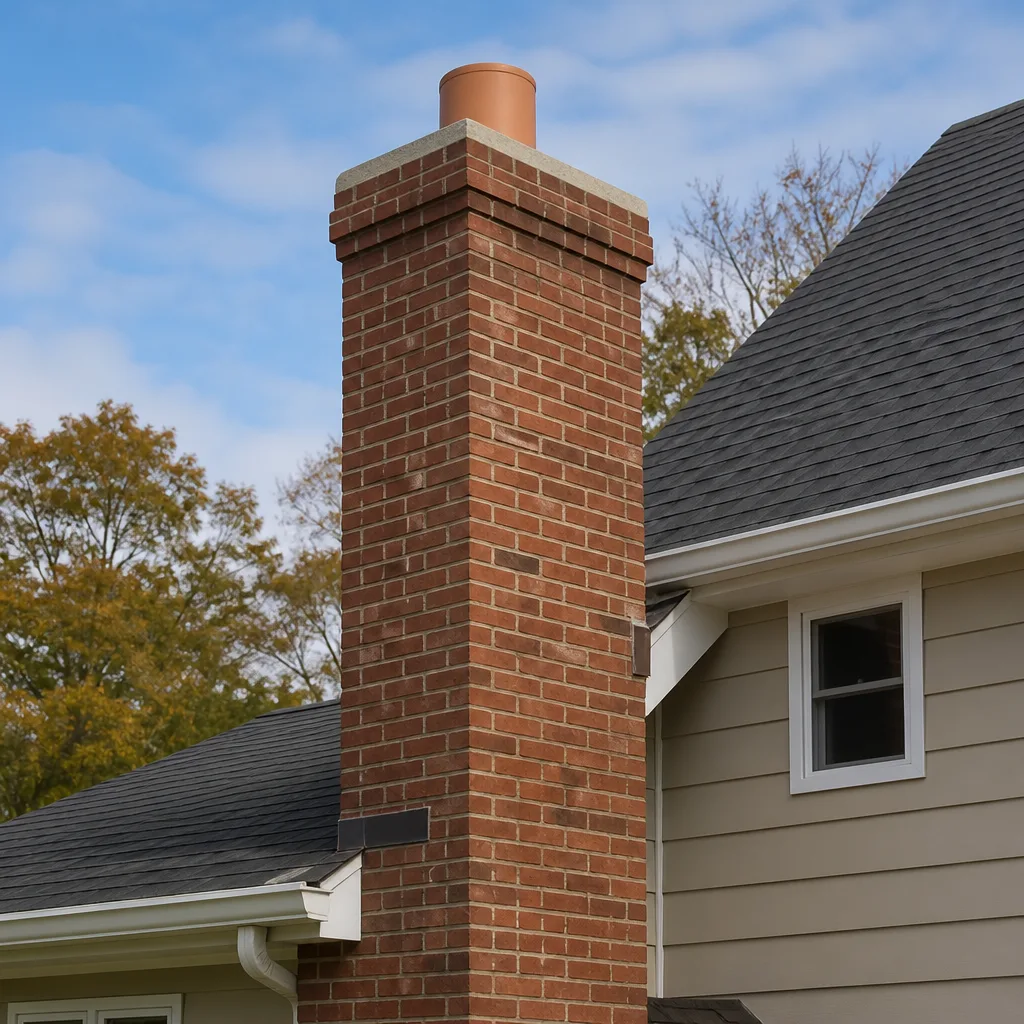 Masonry repair
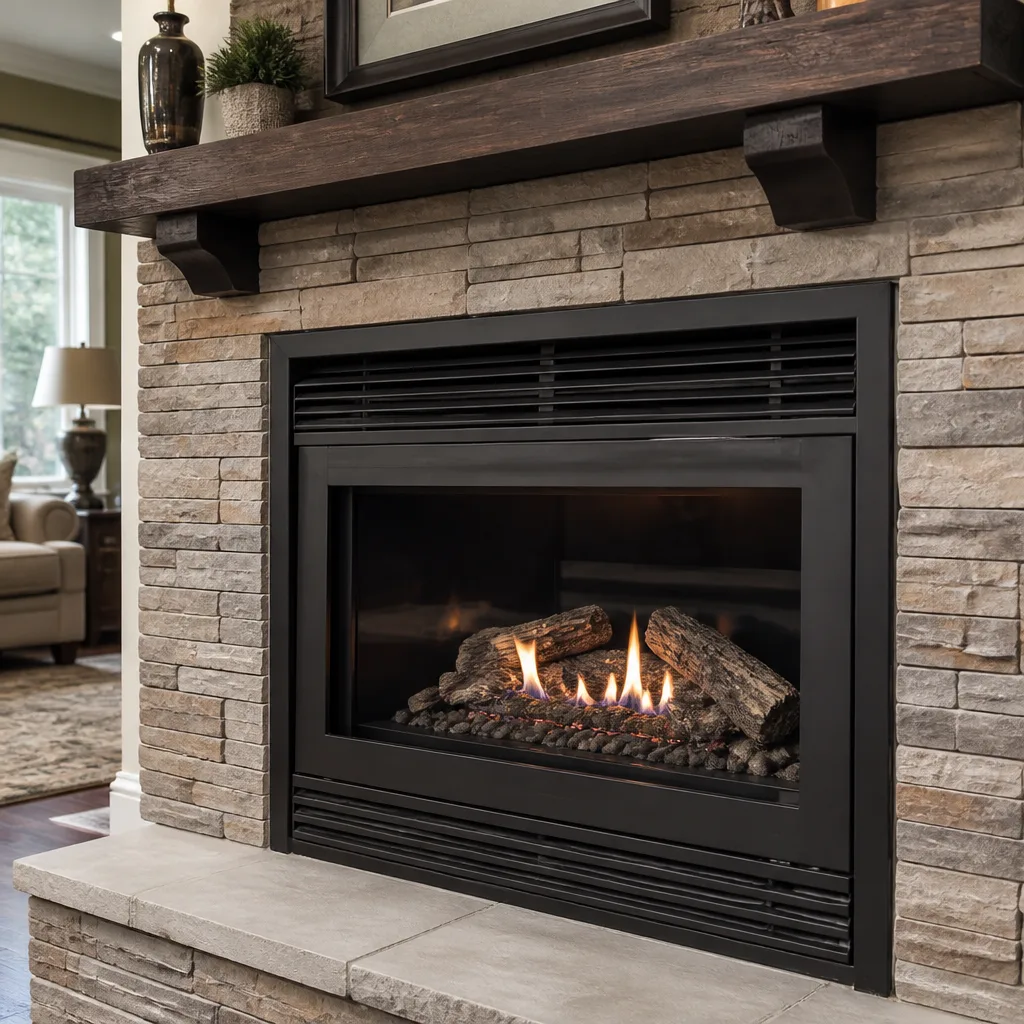 Gas fireplace service
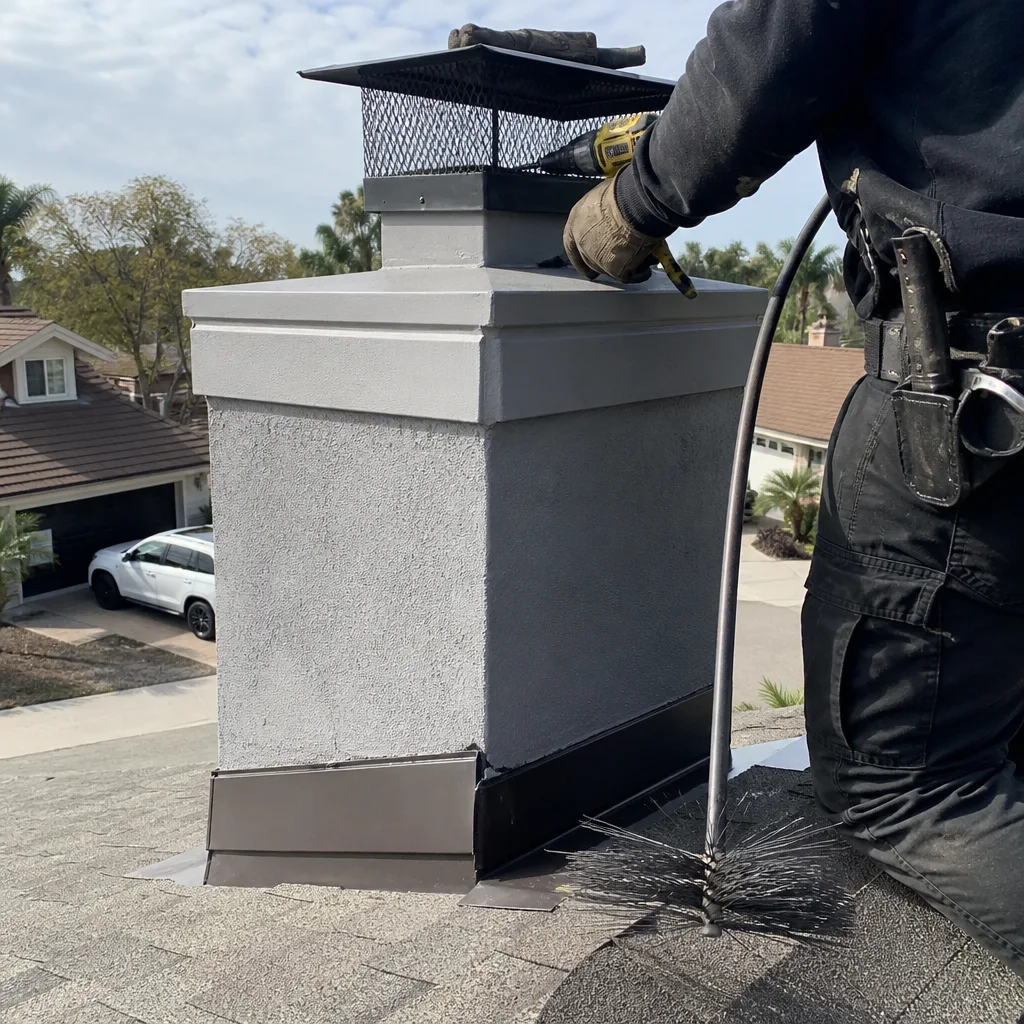
Level 1 sweep and inspection to the NFPA 211 annual standard - flue, crown, cap, and flashing checked and photographed
Chimney sweep logs do not sweep chimneys. They loosen some creosote - which then falls where a brush and vacuum still have to collect it.
Chimney Cleaning Emergency Preparedness Guide for Carlsbad Homes
During a Santa Ana wind event, a chimney with an improperly fitted or corroded cap can introduce live embers directly into a home’s firebox. That’s not a theoretical risk in North San Diego County. It’s a documented ignition pathway that has caught more than a few Carlsbad homeowners off guard, usually around 2 a.m. when the wind is howling and the power is flickering. This guide walks through the emergency scenarios most chimney guides skip: active chimney fires, wildfire ember intrusion, high-wind backdraft, and post-storm structural compromise. You’ll learn what to do in the first two minutes of a chimney fire, how to prep your flue system before a Red Flag warning, and what to document for insurance if something goes wrong. Because in Carlsbad, the question isn’t whether the wind will blow. It’s whether your chimney system is ready when it does.
Styles & brands we work with
Quick Answer
Chimney emergency preparedness in Carlsbad means having a working protocol for four distinct threats: active chimney fires, wildfire ember intrusion through the cap or flue, Santa Ana wind backdraft carrying smoke and heat into the home, and post-storm damage to the chimney crown or chase that compromises the system before your next fire. The foundation of all of it is a clean flue, a properly fitted spark-arresting cap, and a damper you can operate in under five seconds. If your chimney hasn’t been inspected in the last 12 months, your preparation starts with that call.
Table of Contents
- How to Identify an Active Chimney Fire and What to Do in the First Two Minutes
- Wildfire-Specific Chimney Prep for Carlsbad Homes
- Santa Ana Wind Protocol: When to Close Your Damper and Why
- Post-Rain and Post-Storm Chimney Inspection Checklist
- What to Document After a Chimney Emergency for Insurance
- Why Your Chimney Cap Is the First Line of Defense
- Fireplace Clearance Rules and Combustible Hazards Around the Hearth
- Common Mistakes to Avoid
- When to Call a Professional
- Frequently Asked Questions
- The Bottom Line
How to Identify an Active Chimney Fire and What to Do in the First Two Minutes
An active chimney fire doesn’t sound like a fireplace. It sounds like a freight train or a commercial jet running low over your roof. That’s the first cue, and it’s a distinctive one. The second is a clicking or tapping sound from the flue, caused by thermal expansion of the liner or masonry under extreme heat. The third is visual: dense, dark smoke, flames at the chimney top, or embers and debris falling onto the roof or into the firebox.
Here’s what to do in the first two minutes:
- Close the damper immediately if you can reach it safely. This cuts off the primary oxygen supply feeding the fire from below. Do not attempt this if flames are already rolling out of the firebox opening.
- Close the glass doors on the fireplace if you have them. This further starves the fire of air.
- Evacuate everyone from the home. Do not wait to see if it “calms down.” Chimney fires can reach 2,000 degrees Fahrenheit, hot enough to crack flue tiles and ignite adjacent framing within minutes.
- Call 911 from outside the house. Tell the dispatcher you have an active chimney fire, not just a fireplace fire. The fire response is different.
- Do not use water on the fire in the fireplace. The thermal shock can shatter flue tiles and accelerate structural damage. Let the fire department handle it.
We’ve inspected Carlsbad chimneys after chimney fires where the homeowner did everything right. The firebox was intact, the damage was contained to the flue liner, and the repair was manageable. We’ve also seen the other kind: where someone dumped water on the fire, cracked the liner into segments, and turned a $2,000 repair into a full $7,000 reline. The difference was the first two minutes.
Wildfire-Specific Chimney Prep for Carlsbad Homes
Carlsbad sits in a wildfire-prone region where Red Flag warnings are a seasonal reality, not an anomaly. The good news is that your chimney can be configured to resist ember intrusion in ways a standard builder installation doesn’t. The bad news is that most chimneys in Carlsbad were never retrofitted after construction. If your home was built before 2010, there’s a strong chance your cap is undersized, corroded, or missing the spark arrestor screen that blocks live embers.
An ember-resistant cap should have these specifications:
- Mesh size no larger than 3/4 inch, ideally 5/8 inch. Anything larger allows wind-driven embers to pass through. Anything smaller clogs with creosote. The 5/8 inch mesh is what serious contractors specify.
- Solid top with adequate overhang. The cap should shed rain and direct wind, not allow it to slam straight down into the flue.
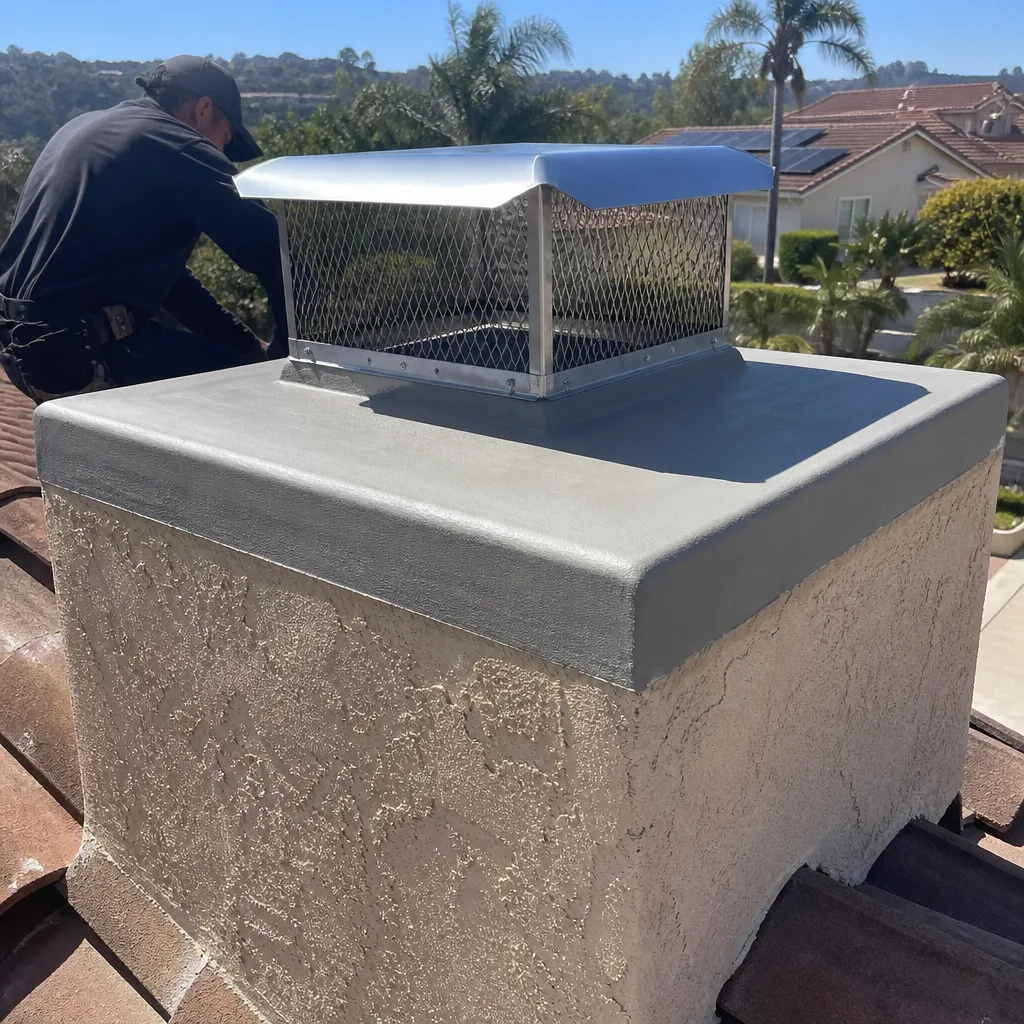
- Corrosion-resistant material. Coastal air in Carlsbad eats galvanized steel. Stainless steel or copper are the long-term answers. We stock and install caps from Olympia Chimney and Famco for this exact reason.
- Properly sized for the flue opening. A cap that’s too small restricts draft and forces smoke back into the home. One that’s too large lets embers slip around the edges.
During a Red Flag warning, the protocol is simple: close the damper, keep the firebox doors shut, and if you have a top-sealing damper, close that too. An unused fireplace during a wildfire event is a vent, not a fireplace. Embers don’t need an invitation.
After a wildfire or a Red Flag event that passed close to your neighborhood, have the chimney inspected before your next fire. Even if the fire never touched your property, wind-driven ash and embers can lodge in the cap mesh, damper assembly, or smoke shelf. In our experience, post-wildfire inspections in Carlsbad regularly turn up charred debris in the chimney that homeowners had no idea was there.
Santa Ana Wind Protocol: When to Close Your Damper and Why
Santa Ana winds don’t just push flames. They reverse pressure gradients around your home. A strong gust across the chimney top creates a venturi effect that pulls air down the flue instead of letting it rise. That’s backdraft, and it does two things. First, it pushes cold air, ash, and smoke into your living room. Second, if you have a fire burning, it can blow heat and embers into the room.
The fix is counterintuitive to some homeowners: close the damper when the fireplace is not in use. Not partially. Fully. An open damper in a Santa Ana event turns your chimney into a wind tunnel. We’ve walked into Carlsbad living rooms where ash from the previous winter’s fires was blown out of the firebox and across the carpet simply because the damper was left open during a three-day wind event.
If you have a top-sealing damper, close it during high-wind forecasts as well. This creates a barrier at the flue top that prevents pressure reversal from getting started. If your damper is rusted, warped, or won’t fully close, that’s a repair issue, not a comfort issue. A damper that leaks 20 percent of the flue opening during a Santa Ana event is still delivering a room full of wind and ash. We repair and replace dampers in Carlsbad regularly, and the difference is immediately noticeable on the next windy night.
Post-Rain and Post-Storm Chimney Inspection Checklist
Carlsbad gets most of its annual rain in a handful of storm events between November and March. Each one is a stress test for your chimney crown, cap, and chase. After any significant storm, here’s what to verify before your next fire:
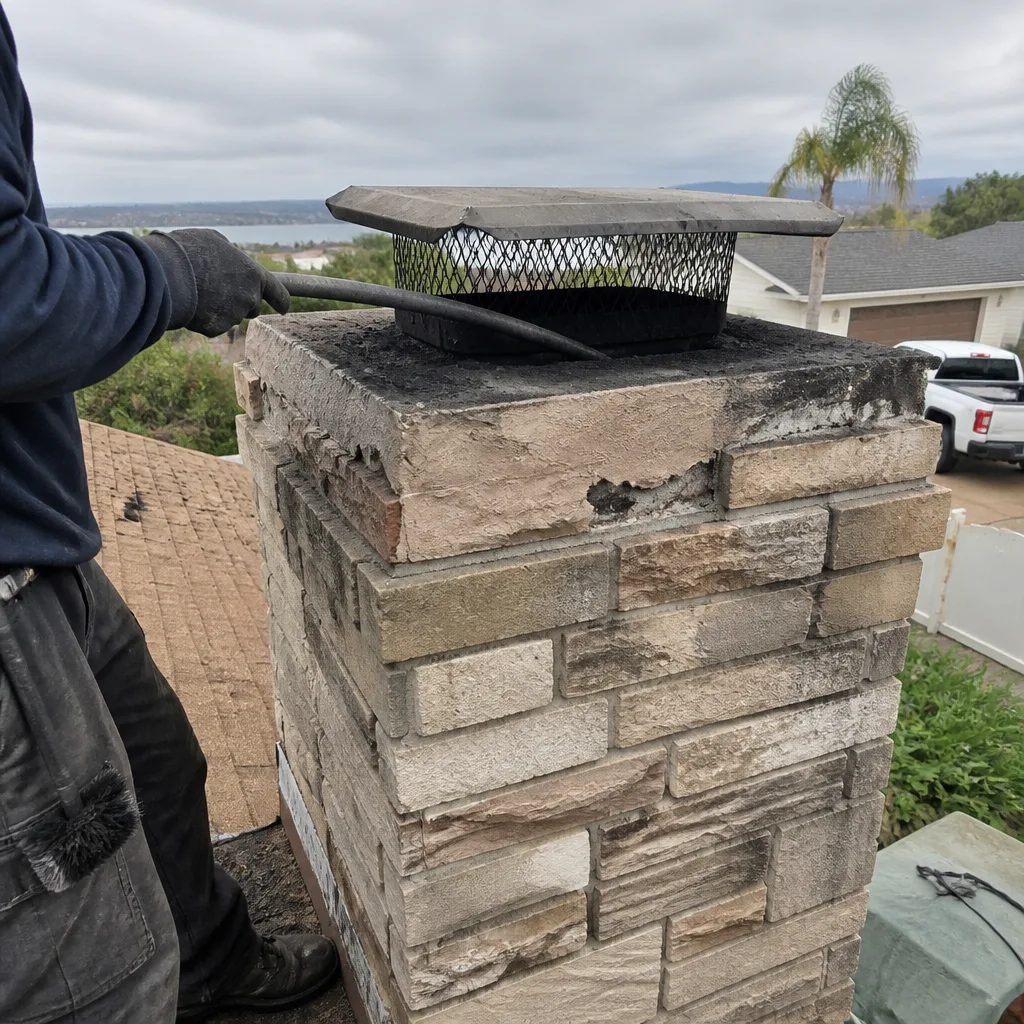
- Check the chimney crown for cracks or spalling. The crown is the concrete slab at the top of the chimney that sheds water away from the flue. Even hairline cracks let water in, and water plus heat equals accelerated masonry failure.
- Verify the cap is still in place and properly attached. High winds can loosen cap fasteners. A cap that’s shifted is no longer doing its job.
- Look for water stains on the ceiling near the chimney chase. This indicates a leak at the roof penetration or through the chase top pan.
- Check the damper for stiffness or rust. Water intrusion accelerates damper corrosion. A damper that was smooth in October and stiff in January tells you water got in.
- Verify there’s no debris in the firebox. Storms can drop leaves, twigs, and roof granules down an unsealed flue.
- Confirm the smoke test on your next fire. Light a small fire and watch the smoke. If it doesn’t draw up and out within 60 seconds, or if it backs into the room, stop using the fireplace and call for an inspection.
If you find damage, don’t use the fireplace. Water-compromised flue tiles or a cracked crown don’t fail gracefully. They fail during the next hot fire when thermal stress meets structural weakness. A $180 inspection in Carlsbad is cheaper than a $4,000 repair and infinitely cheaper than a house fire. Our Chimney Sweep in Carlsbad service covers this checklist as part of every routine visit.
What to Document After a Chimney Emergency for Insurance
If you experience a chimney fire, ember intrusion, or backdraft event that causes damage, what you document in the first 48 hours directly affects your claim outcome. Insurance adjusters see chimney claims regularly, and they know what incomplete documentation looks like.
Document this, in this order:
- Photograph everything before cleanup begins. Soot patterns on the firebox, smoke staining on walls or ceiling, the cap condition, the flue interior if visible, any cracked masonry. Do not sweep or wash anything until you have complete photos.
- Keep the fire department report. If 911 responded, request a copy of the incident report. This is primary evidence that a qualifying event occurred.
- Note the date of your last chimney cleaning and inspection. Insurance companies will ask. If you can show a clean flue inspected within 12 months, you’re in a far stronger position than someone whose last cleaning was five years ago.
- Document the weather conditions. Santa Ana wind event? Red Flag warning? Heavy rain? Insurers classify claims differently based on the proximate cause.
- Get a certified chimney inspection before signing any settlement. This is the step most homeowners skip, and it’s the most expensive mistake. A thorough inspection with a camera report gives you an itemized list of what actually needs repair and what it should cost. That report becomes your negotiation baseline.
Here’s what matters legally: calling a certified inspector before cleanup means the damage is documented in its original state by a third party. That’s evidence an insurance adjuster can’t dismiss as homeowner negligence. Our Chimney Repair in Carlsbad service includes camera-scoped documentation that holds up in claims processes.
Why Your Chimney Cap Is the First Line of Defense
Most of the emergency scenarios in this guide share a root cause: a missing, damaged, or inadequate chimney cap. The cap is the single most underrated component on your roof. It does four jobs simultaneously: blocks rain, blocks embers, blocks animals, and manages draft. Lose any one of those functions and you’ve created a future emergency.
In Carlsbad’s coastal environment, cap corrosion is a bigger problem than homeowners realize. Salt air accelerates oxidation on galvanized steel, and within five to seven years, caps that looked fine at installation are rusted through at the seams. A corroded cap fails in two common ways: the top separates from the base during high winds, or the mesh rusts out and creates an opening that embers, birds, and debris can pass through. Either failure is an emergency waiting for the wrong wind event.
We install caps from Olympia Chimney and Famco because those are the manufacturers specialty chimney contractors specify, not big-box substitutes. The gauge of the steel, the quality of the mesh, the weld points. These things matter when your cap is the difference between a contained fireplace and a roof fire during a Santa Ana event.
If you don’t know what condition your cap is in, that’s the first thing to check. If you can’t see it from the ground, that’s normal. Most caps are invisible from the yard. Our Supreme Chimney Sweep home page explains how our inspection process works, and a chimney camera inspection can show you exactly what your cap looks like from the flue side.
Fireplace Clearance Rules and Combustible Hazards Around the Hearth
Emergency preparedness isn’t only about the chimney. It’s about what’s near the fireplace when something goes wrong. Carlsbad homes run the range from 1970s tract builds with minimal hearth extensions to newer coastal properties with decorative-only fireplaces. In both cases, the rules of combustible clearances apply, and most homeowners break them without knowing it.
National fire code requires a minimum 16 inches of non-combustible hearth extension in front of a fireplace opening less than 6 square feet, and 20 inches for larger openings. That includes the area directly in front of the firebox, where burning logs can roll out. But the more common violation we see in Carlsbad is what accumulates over years: furniture pushed too close, a wood rack against the brick, holiday decorations on the mantel, a rug that extends into the clearance zone.
During a chimney fire or backdraft event, those combustibles become fuel. A fire that would have stayed contained to the chimney now has a path into the living space. Walk through this checklist before fire season:
- Nothing combustible within 36 inches of the fireplace opening.
- No furniture, rugs, or drapes within the hearth extension zone.
- No wood storage next to the firebox, even if it’s decorative. Loose bark and splinters are kindling.
- Mantel clearance: anything combustible on the mantel should be removed during active fires. Heat rises, and mantels get hotter than homeowners expect.
- Fireplace screens and glass doors in working order, closing fully on their tracks or hinges.
This is the part of preparedness that costs nothing to fix. Most of it is just moving things. Do it before the wind blows, not during.
Common Mistakes to Avoid
- Waiting until the first cold night to check the chimney. By November, every chimney professional in Carlsbad is booked weeks out. An inspection in September means you’re not making a desperation call in December, and you’ve confirmed the system is safe before you rely on it.
- Assuming a decorative fireplace doesn’t need maintenance. Even gas and decorative-only fireplaces have flues, caps, and dampers. They need the same inspections. A decorative fireplace that hasn’t been checked can be just as dangerous if the flue is blocked or the cap is missing.
- Not knowing where the damper is, or how to close it fast. During an emergency, the damper is what you close in the first 30 seconds. If you can’t reach it or can’t tell if it’s open or closed, that’s a preparation failure. Practice it once before fire season.
- Using a wood-burning fireplace during a Red Flag warning. This is prohibited in most of San Diego County during active Red Flag conditions. Check the current burn restrictions before lighting any fire. One spark in 40 mph winds is all it takes.
- Skipping the post-fire inspection because “the fire looked fine.” Creosote buildup can ignite from a single hot fire, burn partially, and leave damaged flue tiles that fire more intensely on the next use. A chimney that looks fine from the firebox can be hiding damage 15 feet up the flue.
- Delaying a repair because the chimney isn’t used often. Damage doesn’t self-heal. A cracked crown gets worse every rain. A rusted damper gets stiffer every month. Small repairs get bigger, and the chimney that “isn’t used often” is exactly the one that becomes an emergency when you finally need it.
- Ignoring dryer vents when thinking about fire preparedness. Dryer vent fires are among the most common household fire sources in Carlsbad, and they’re entirely preventable. If you’re preparing your chimney, prepare your dryer vent too. Our Dryer Vent Cleaning in Carlsbad service is built around this exact fire-prevention mindset.
When to Call a Professional
Some situations call for a trained eye, not a flashlight and a hunch. Call a chimney professional if you see crumbling masonry or spalling on the chimney exterior, if smoke backs into the room during normal fires, if you can hear wind whistling down the flue on calm days, if you’ve experienced a chimney fire and haven’t had the flue camera-inspected since, or if you’re buying a home in Carlsbad with an existing fireplace and no maintenance records. These are signs of structural or mechanical compromise that a visual check from the hearth won’t reveal. Supreme Chimney Sweep offers free estimates in Carlsbad. Call (833) 589-8164 and we’ll tell you exactly what you’re looking at.
Frequently Asked Questions
The National Fire Protection Association recommends an annual inspection and a cleaning whenever creosote reaches 1/8 inch of buildup. For Carlsbad homes that burn wood regularly through the winter months, that typically means a sweep every year. If you only burn occasionally or use a gas insert, you may be able to extend to every other year, but the inspection should stay annual. Coastal humidity in Carlsbad can also accelerate creosote accumulation because moisture binds with soot and creates a denser, stickier residue. Call (833) 589-8164 to schedule an inspection and get an honest read on whether your chimney needs a sweep right now.
A chimney fire typically sounds like a low roar, similar to a freight train, a jet engine, or a large bonfire. You may also hear tapping or clicking from the flue as the liner expands under extreme heat. If you hear any of these sounds, close the damper if it’s safe to do so, evacuate the home, and call 911 immediately. What you’re hearing is not normal combustion. It’s uncontrolled fire inside your chimney system.
A standard chimney sweep in Carlsbad typically ranges from $180 to $280 for a full clean of the flue, firebox, and smoke chamber, with the exact price depending on the chimney’s condition and accessibility. If the chimney hasn’t been cleaned in several years or has heavy creosote or obstructions, costs can run higher. The sweep should always include a basic safety inspection of the damper, cap, and visible flue surfaces. Call (833) 589-8164 for a free estimate on your specific chimney.
Not every damaged liner requires a full replacement. The answer depends entirely on what the camera inspection shows. Hairline cracking or minor spalling can sometimes be addressed with a resurfacing method like HeatShield, which restores the flue surface without tearing out the old liner. Moderate to severe damage, including separated flue tiles or gaps in the liner system, typically requires a full reline. We don’t recommend a full replacement unless the camera footage proves it’s necessary, and we show you that footage before any work is scheduled. Call (833) 589-8164 to get a camera-scoped assessment of your liner’s actual condition.
HeatShield is a specialized flue resurfacing system that applies a ceramic-cement coating directly to the damaged flue interior, restoring structural integrity and sealing cracks without a full liner replacement. It’s a legitimate, tested repair method used by certified chimney contractors, and it can save thousands of dollars compared to relining. At Supreme Chimney Sweep, we’re HeatShield-capable, which means a damaged flue in a Carlsbad home can often be restored the same visit it’s discovered, without handing you off to another company.
If you skip the inspection, you’re operating blind. Creosote builds up, caps corrode, dampers seize, and flue tiles crack, all invisible from the living room. When one of those failures becomes an emergency, it’s usually during a fire or a Santa Ana wind event when the stakes are highest. The annual inspection is the cheapest insurance you’ll ever buy against a chimney fire. Carlsbad homeowners who stay on an annual schedule catch small problems before they become emergencies. Those who skip it meet us under very different circumstances.
The Bottom Line
Chimney emergency preparedness in Carlsbad comes down to three things: a clean flue, a properly fitted ember-resistant cap, and a damper you can close in under five seconds. Get those three right, and most of the emergency scenarios in this guide become non-events. Get them wrong, and you’re relying on luck during the next Santa Ana event. The preparation is cheap and the failure is expensive. If your chimney hasn’t been inspected in the last 12 months, start there. If it has, walk the checklists in this guide and fix what’s broken before the wind does, and explore more guides & resources to keep your system protected year-round.
Written by the team at Supreme Chimney Sweep, serving Carlsbad since 2012.
See the difference
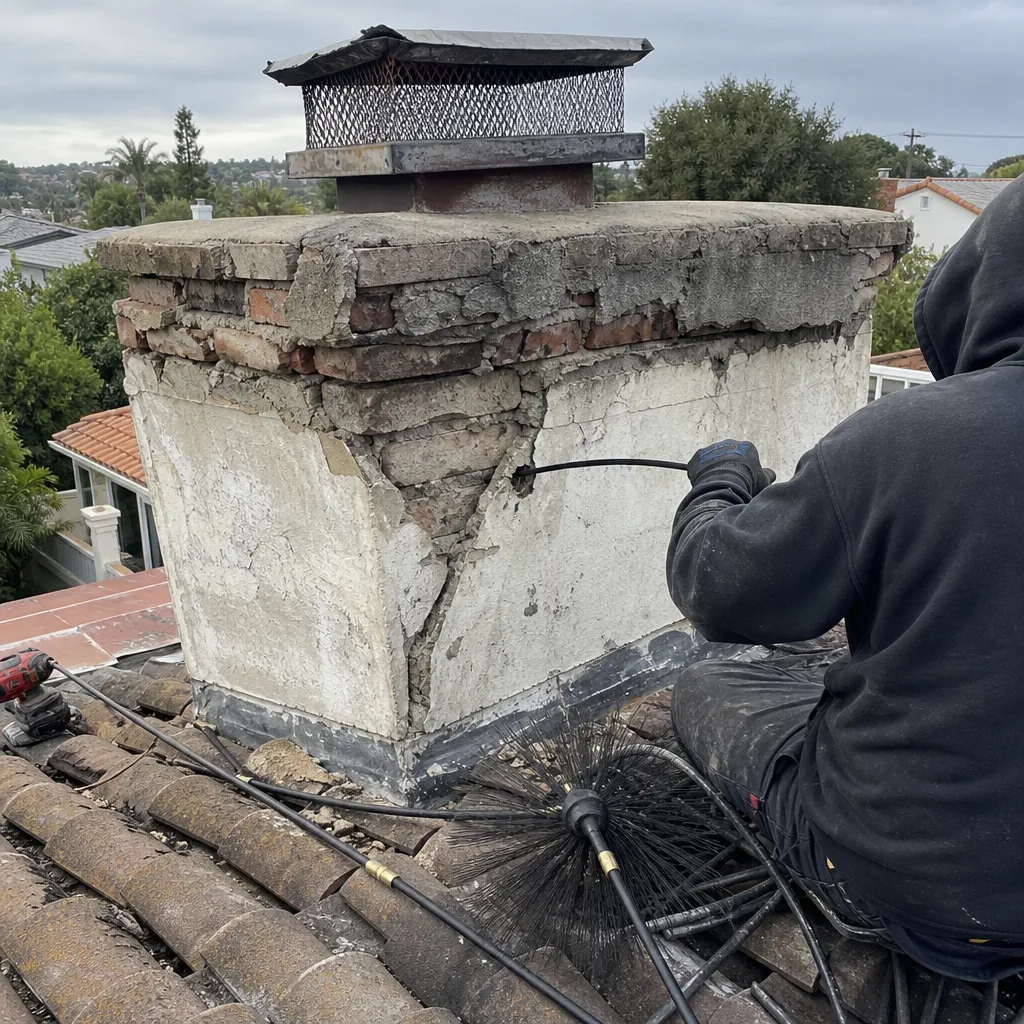 Before
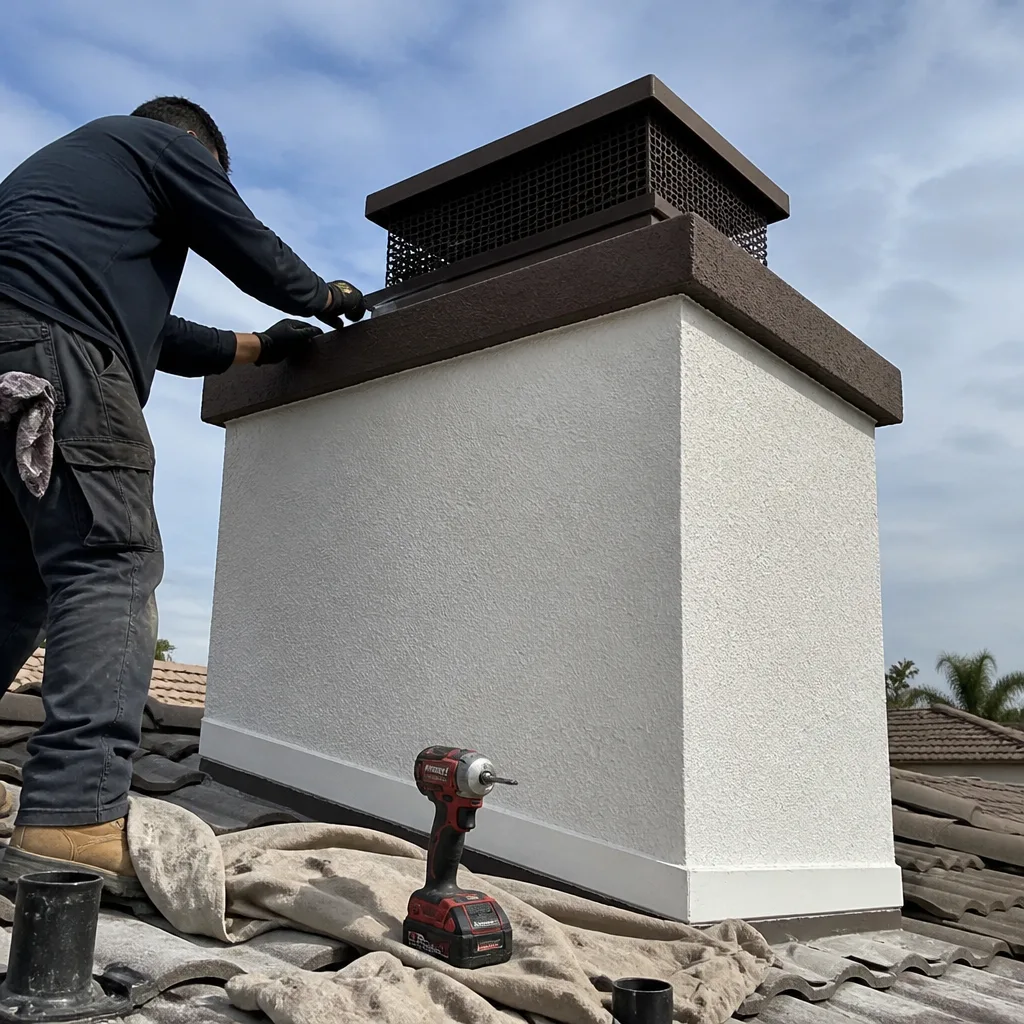 After
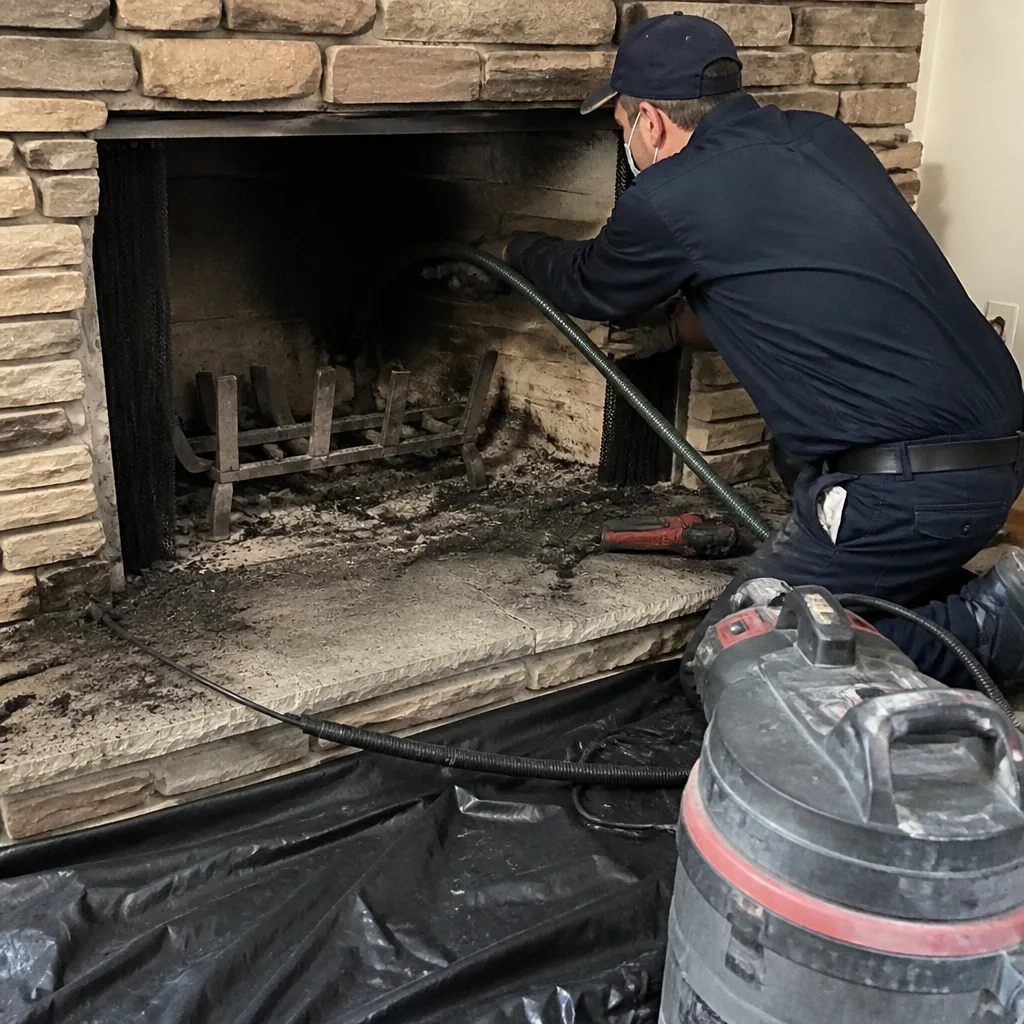 Before
 After
 Before
 After