

Last updated October 30, 2026
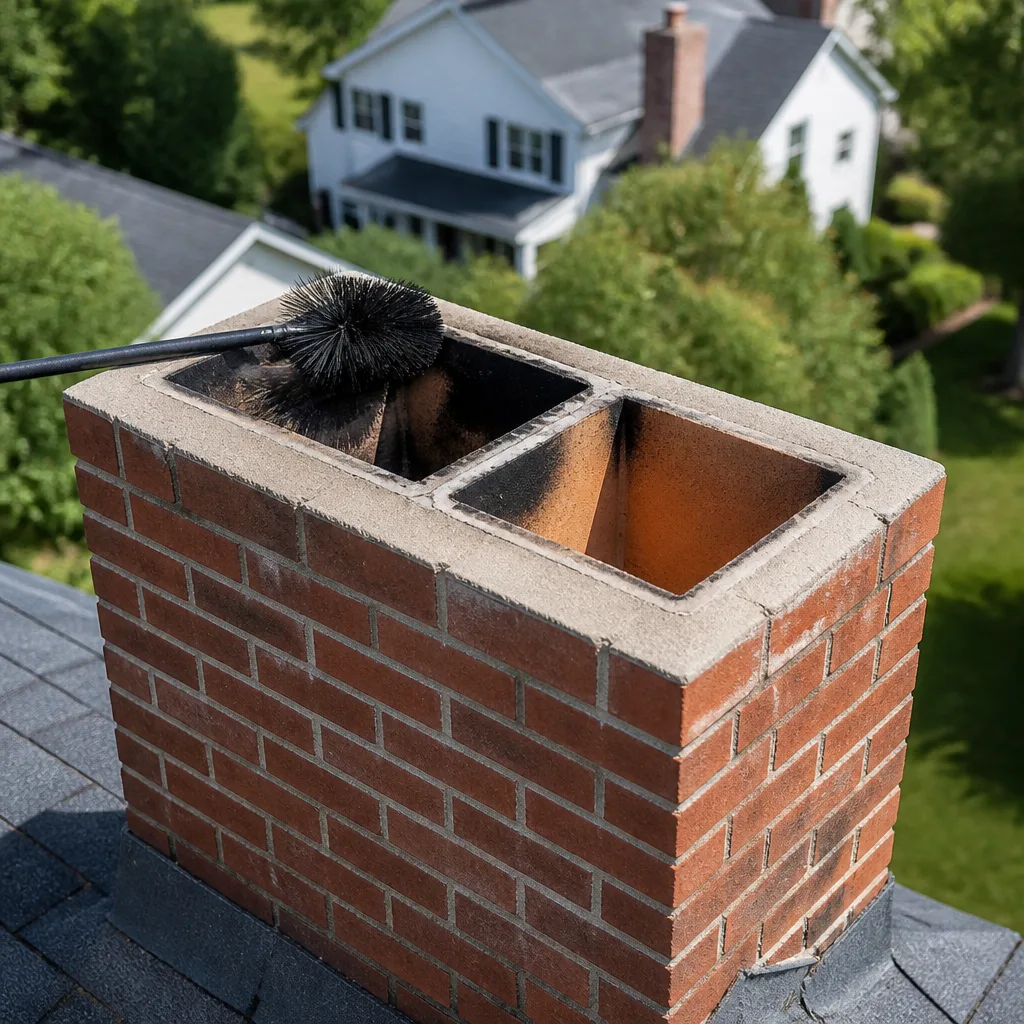 Sweep & inspection
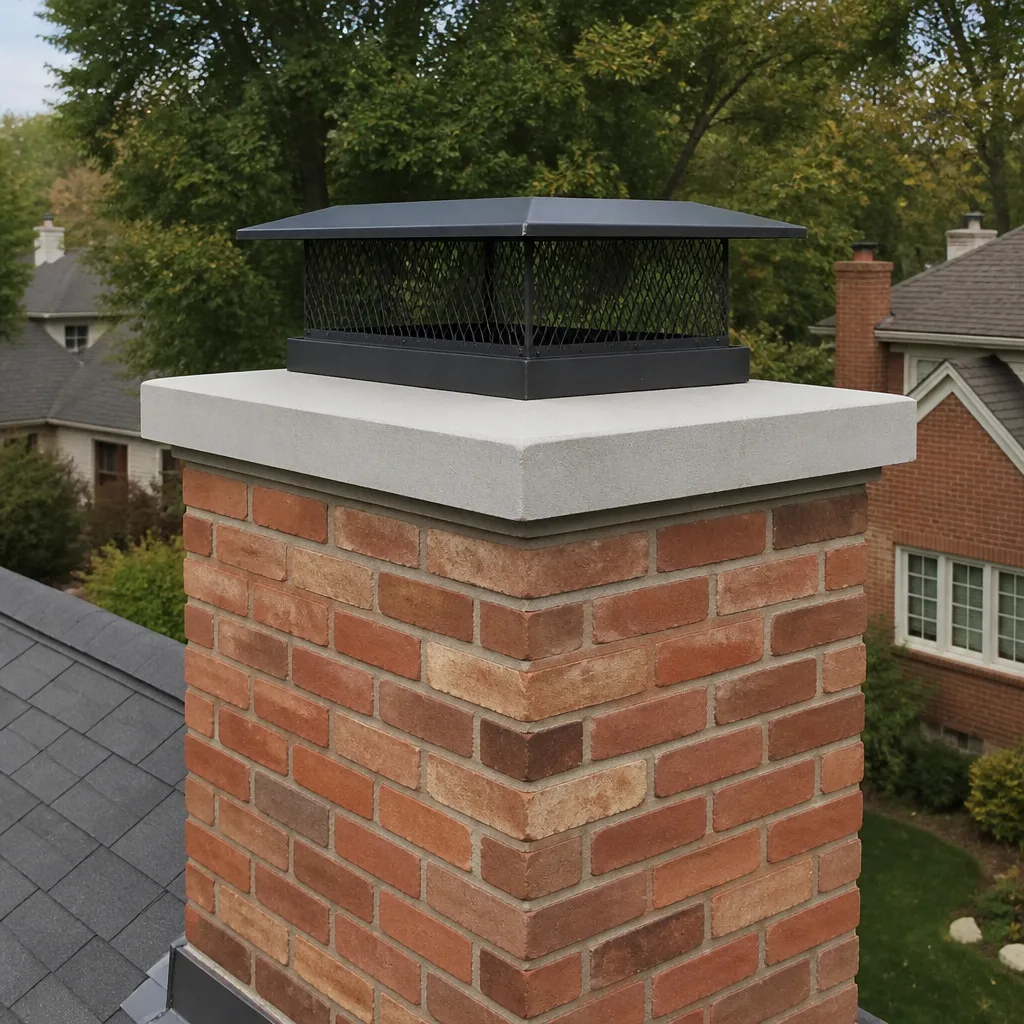 Caps & crowns
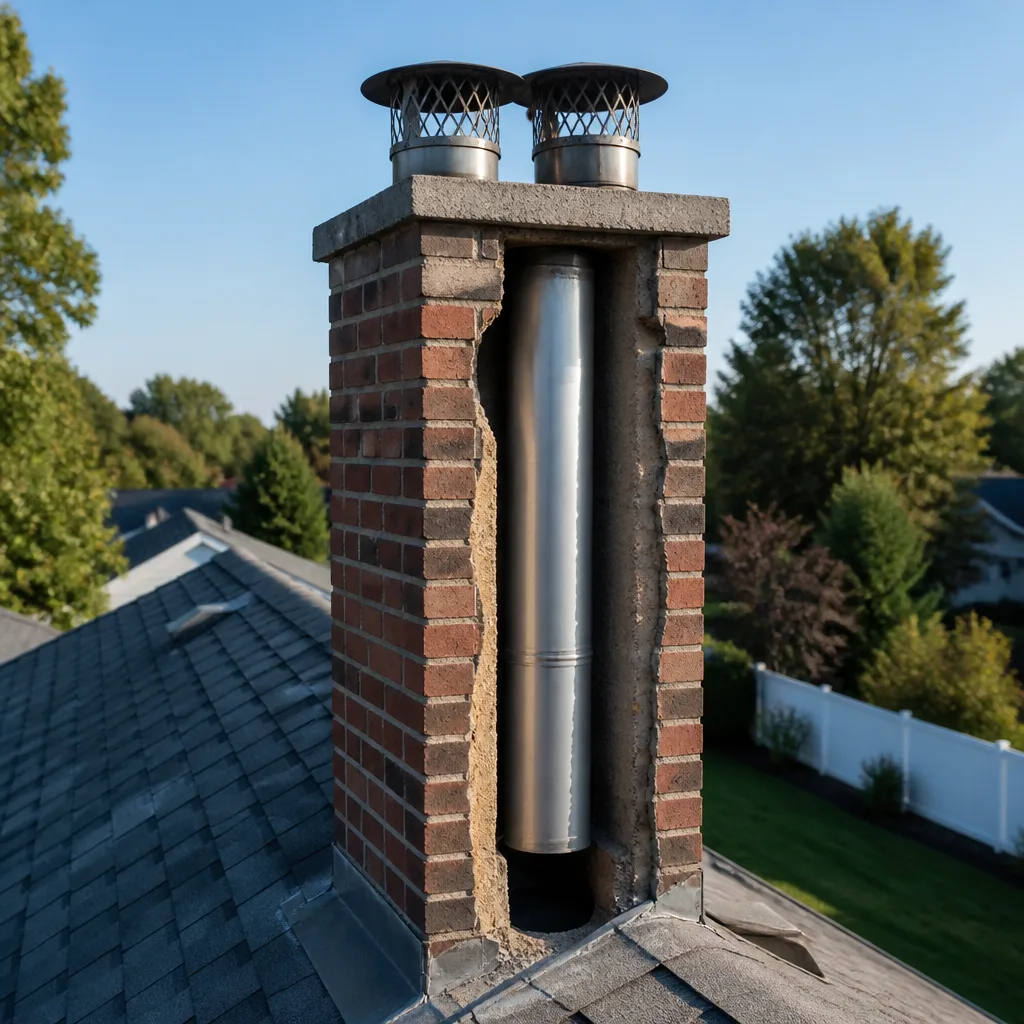 Flue relining
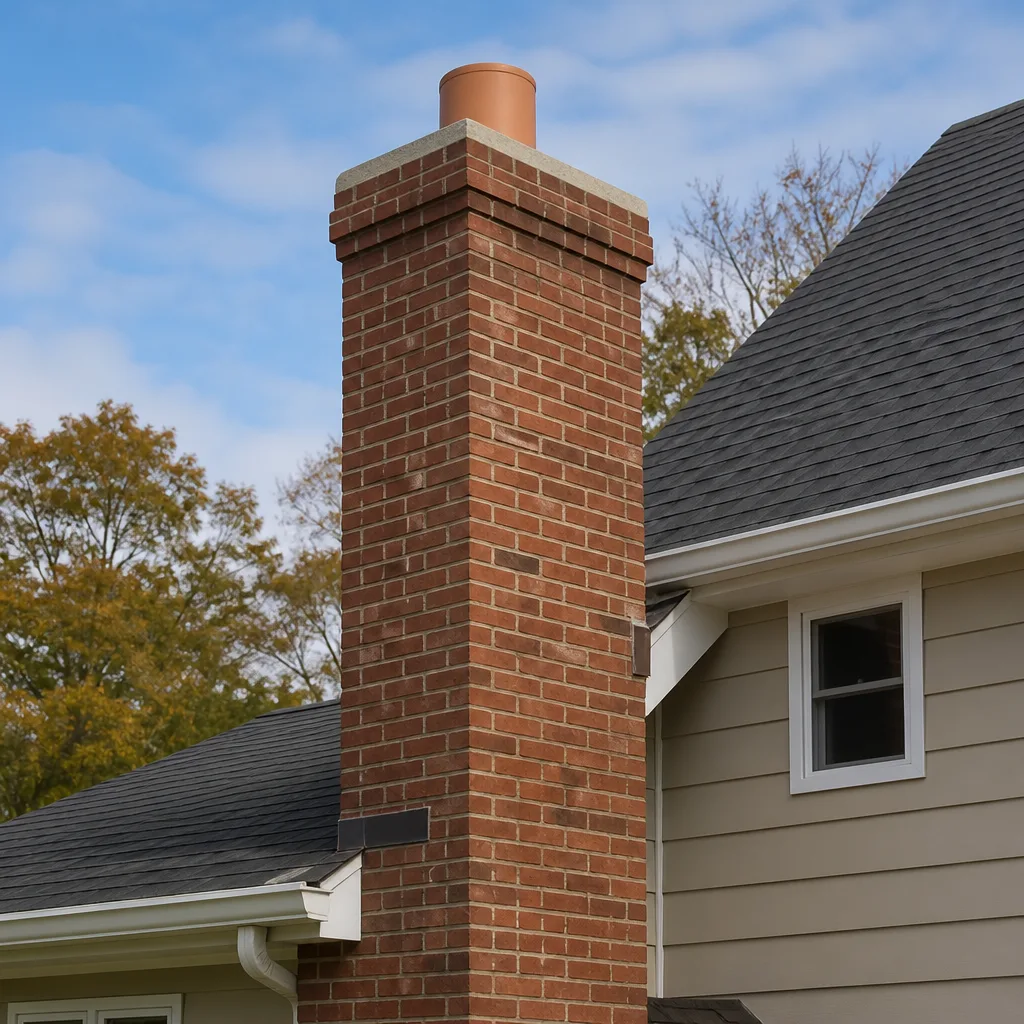 Masonry repair
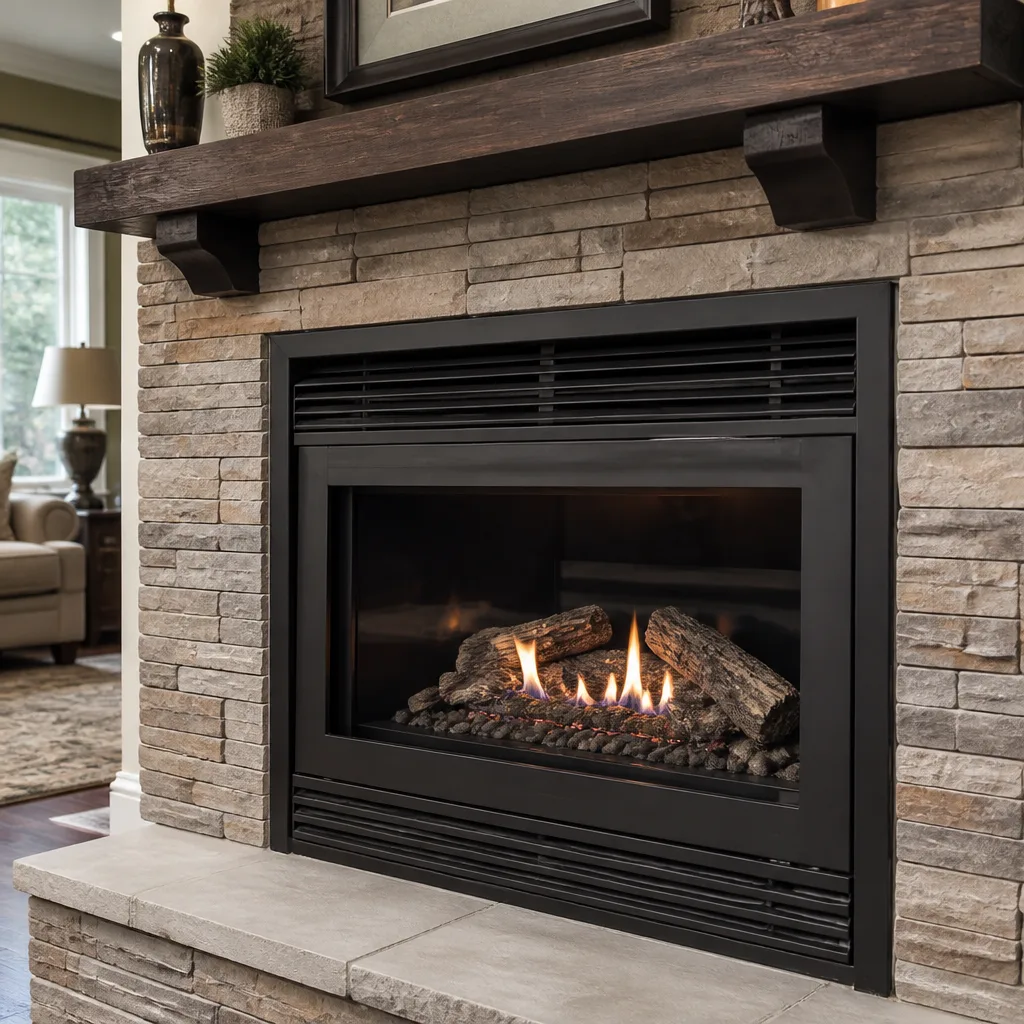 Gas fireplace service
Level 1 sweep and inspection to the NFPA 211 annual standard - flue, crown, cap, and flashing checked and photographed
Chimney sweep logs do not sweep chimneys. They loosen some creosote - which then falls where a brush and vacuum still have to collect it.
Chimney Sweep Maintenance Checklist for Carlsbad Homeowners
The most common chimney problem in coastal Southern California isn’t creosote buildup. It’s mortar and crown deterioration from moisture cycling that goes unnoticed because no one told homeowners to look for it. In Carlsbad, where morning marine layers give way to afternoon sun and winter brings real rain, your chimney expands and contracts daily in ways a chimney in Phoenix or Denver never does. This guide is built for those conditions. You’ll learn what actually fails on Carlsbad chimneys, what to check yourself, what to photograph, and when to bring in a professional who can fix problems on the spot rather than hand you a report and a referral.
Styles & brands we work with
Quick Answer
A Carlsbad homeowner should inspect their chimney twice a year: once in late summer before fire season, and once in early spring after winter rains. The critical checks are crown cracking, cap corrosion, flashing gaps, damper operation, and any white staining on the exterior masonry. A professional sweep is recommended annually for wood-burning fireplaces and every two years for gas-only systems used seasonally, so consider scheduling our Chimney Sweep services to stay on track.
Table of Contents
- Interior Checklist: Firebox, Damper, and Smoke Chamber
- Exterior Checklist: Crown, Cap, Flashing, and Masonry
- Frequency Guidelines: Gas vs. Wood, Use Patterns, and What Actually Builds Up
- How to Document Problems with Your Phone Camera Before Booking
- Why Late Summer Is the Optimal Inspection Window in Carlsbad
- The Coastal Factor: Moisture, Salt Air, and What They Do to Your Chimney
- When a Chimney Needs Repair vs. Full Relining: What Carlsbad Homeowners Should Know
- Common Mistakes to Avoid
- When to Call a Professional
- Frequently Asked Questions
- The Bottom Line
Interior Checklist: Firebox, Damper, and Smoke Chamber
Before you light your first fire of the season, spend ten minutes looking at the inside of your fireplace. Not with a flashlight and a mirror angled awkwardly. Just look. Most problems announce themselves visually if you know what you’re seeing.
Start at the firebox, the brick or refractory panel box where the fire actually burns. In Carlsbad homes built between 1970 and 1990, we frequently see firebrick that looks fine but has hairline fractures running horizontally. Those cracks come from moisture getting into the brick, then heating and cooling. If the firebox panels are loose enough to wiggle with a gentle push, that’s a repair issue, not a cleaning issue. Loose panels let heat reach the framing behind the fireplace.
Next, open and close the damper fully several times. It should move smoothly without grinding, and it should seat completely when closed. A damper that won’t fully close lets conditioned air escape all summer, and a damper that won’t fully open sends smoke into the room. If your damper clanks, sticks, or has visible rust scaling, note it. In coastal Carlsbad, damper rust is common because humid air rises through the flue during summer months and condenses on metal parts.
The smoke chamber, the angled section above the damper, is where creosote builds quietly. You can’t see it well without a professional camera, but you can look for dark staining on the damper frame or the first few inches visible above it. That staining tells you creosote is present higher up. In our experience at Supreme Chimney Sweep home service calls across Carlsbad, smoke chamber buildup is the number one reason a chimney that “looks fine” from the firebox still needs cleaning.
Here’s what to record before calling:
- Firebox condition: Are panels cracked, loose, or missing?
- Damper operation: Does it open and close fully? Any rust or sticking?
- Visible staining: Is there dark, shiny, or flaky buildup above the damper?
- Smell: Does the fireplace smell musty or campfire-like when cold? That’s trapped creosote or moisture.
- Evidence of water: Any white mineral staining, rust drips, or damp spots inside the firebox after rain?
If you find any of these, document them with your phone camera and call a Chimney Sweep in Carlsbad who can inspect thoroughly and repair what they find, same visit.
Exterior Checklist: Crown, Cap, Flashing, and Masonry
The exterior is where Carlsbad’s climate does its worst work. Salt air, morning condensation, afternoon sun, and winter rain combine to attack your chimney crown, cap, flashing, and mortar joints. A generic chimney checklist will tell you to “inspect the exterior annually.” Here’s what that actually means on a coastal California home.
The Crown
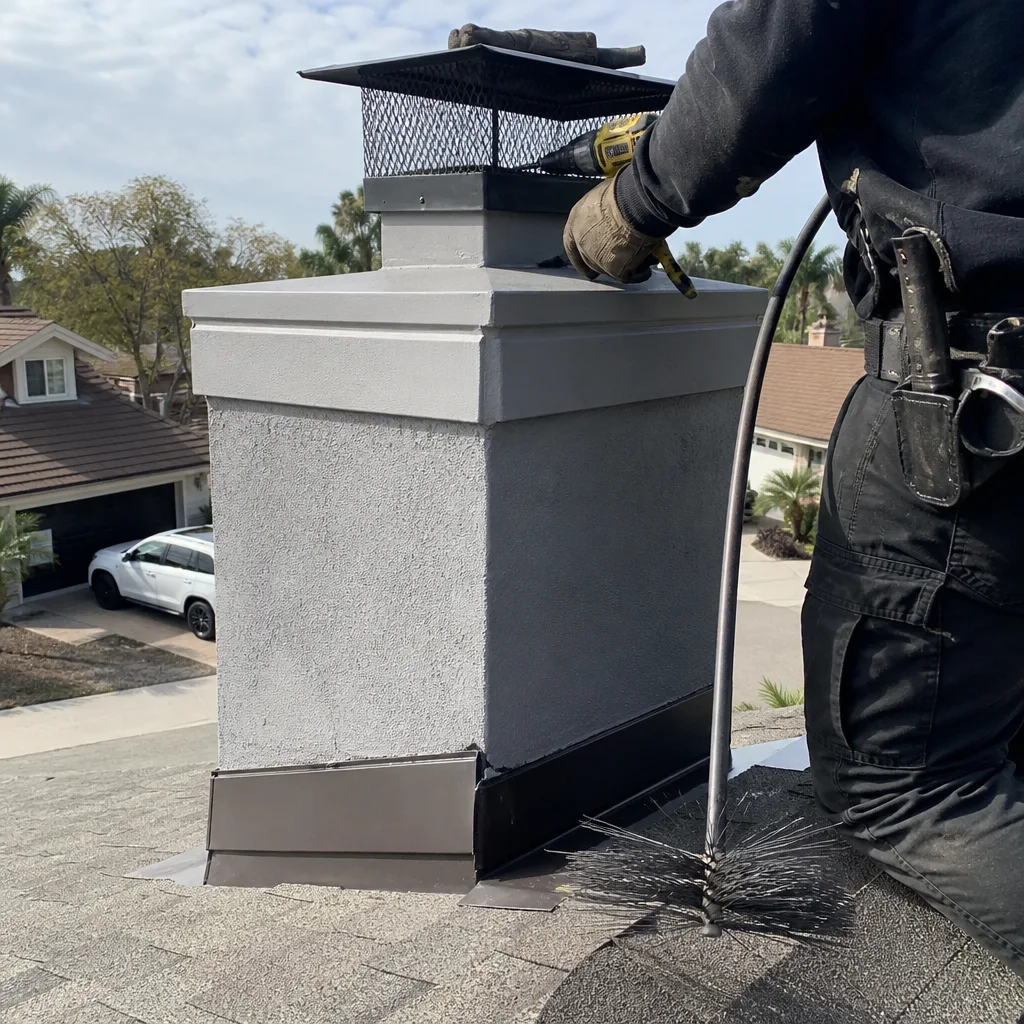
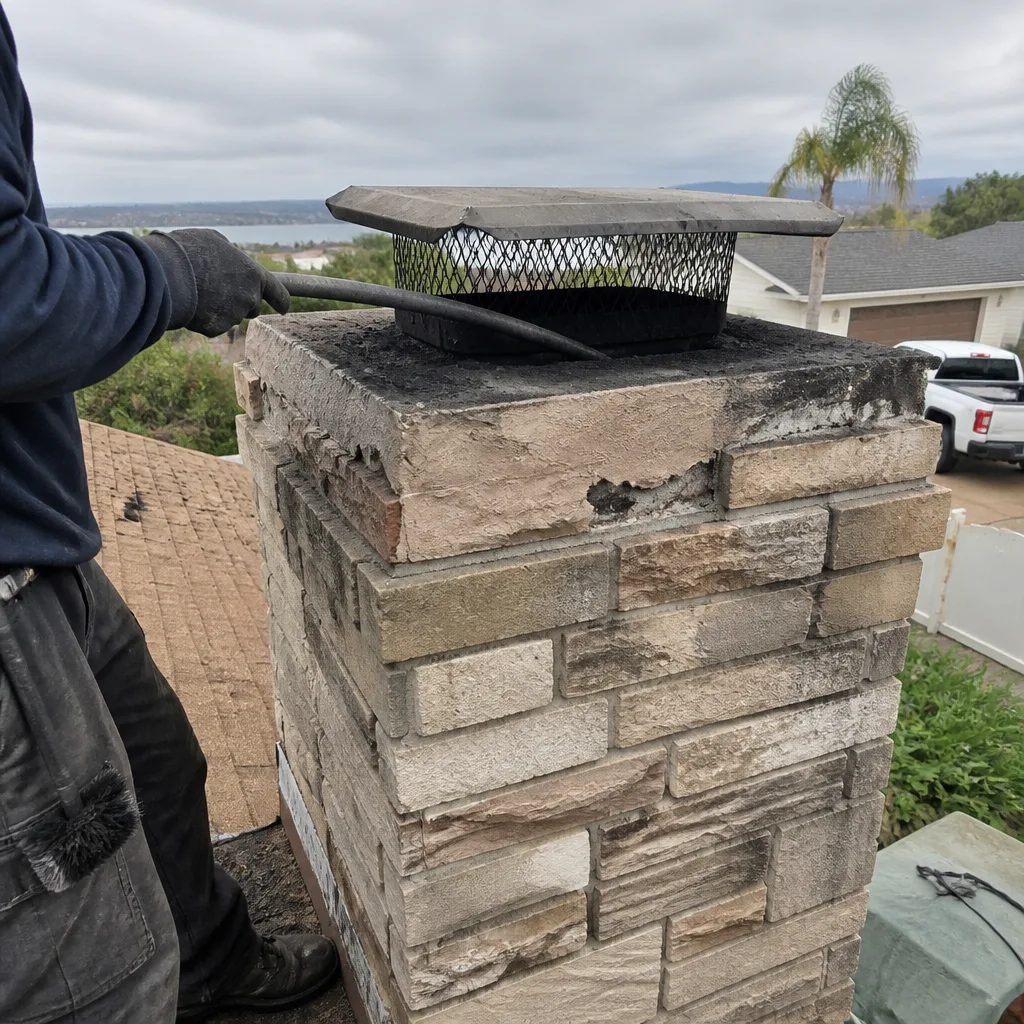
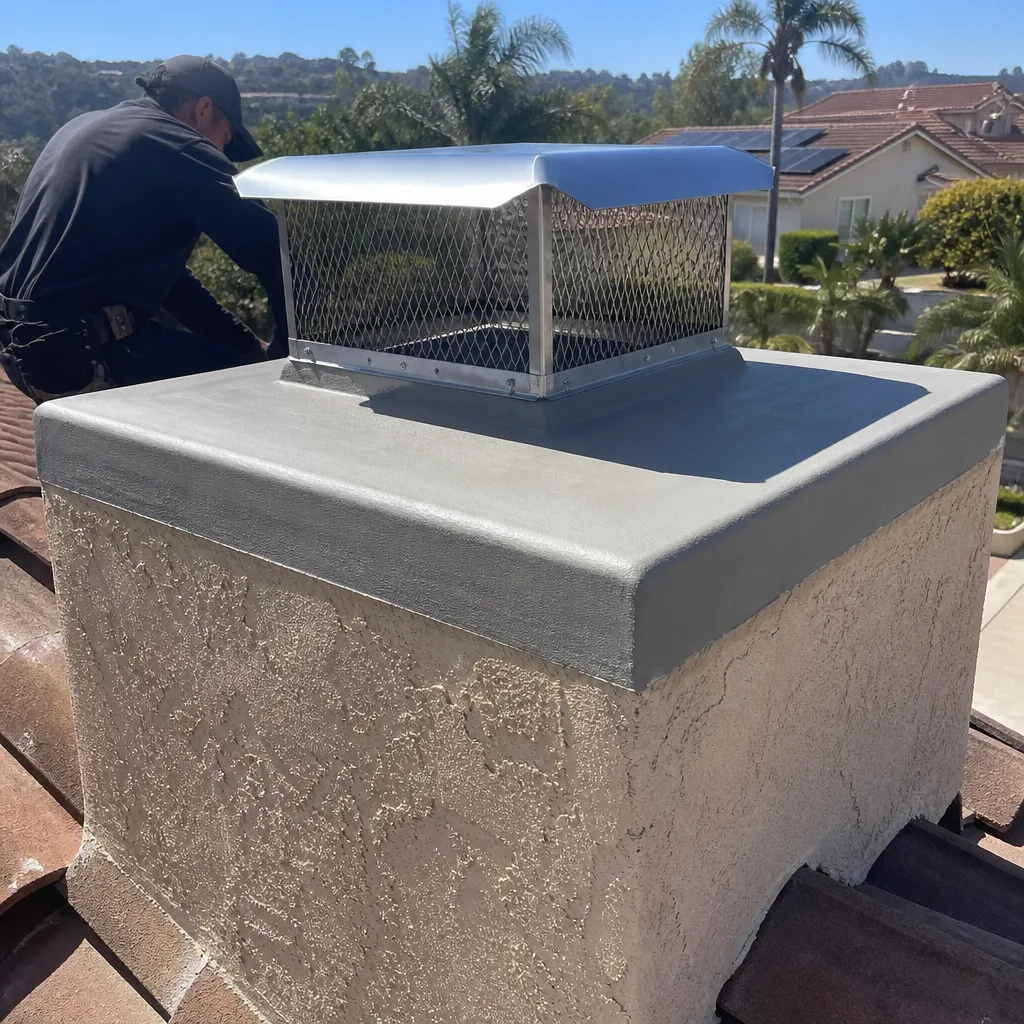
The crown is the concrete or mortar slab at the very top of the chimney. Its job is to shed water away from the flue and masonry. When it cracks, water enters and starts a cycle that destroys mortar joints. A crown crack wider than a credit card edge needs repair. Smaller hairline cracks can be sealed. In Carlsbad, crowns crack faster than inland because daily thermal swings cause micro-expansion and contraction, and salt in the air accelerates concrete deterioration.
The Cap
The cap is the metal cover over the flue opening. It keeps rain, birds, leaves, and embers out. Look for rust, holes, mesh damage, and whether it’s seated level. A rusted-through cap in Carlsbad is not rare. It happens from years of salt-laden moisture sitting on galvanized steel. Upgrading to a stainless cap from a professional-grade line like Olympia Chimney or Famco means you replace it once and stop thinking about it for 20 years. For help deciding, see our guide on Choosing the Right Chimney Cleaning Brand: A Buyer’s Guide for Carlsbad. We stock and install those brands for exactly that reason.
Flashing
Flashing is the metal seal where the chimney meets the roof. In Carlsbad, most flashing failures happen on the ocean-facing side of the chimney first. You’ll see lifted edges, gaps, old caulk that’s dried and separated, or visible rust. Water getting through flashing doesn’t just damage the chimney. It rots roof sheathing and stains ceilings below. If you’re comfortable on a ladder, photograph the flashing from a few angles. If you see gaps, call before the next big rain.
Masonry
Walk around the base of the chimney and look at the mortar between the bricks or stone. Press a key into it. If it crumbles or falls out, the mortar is softened from years of moisture exposure. That’s called spalling, and it means the chimney’s structural integrity is compromised. It’s repairable, but the repair is repointing, not caulking. Caulking over failing mortar traps moisture inside and makes the problem worse.
Frequency Guidelines: Gas vs. Wood, Use Patterns, and What Actually Builds Up
The old rule “sweep your chimney once a year” assumes a wood-burning fireplace used regularly. That’s not how every Carlsbad household operates. Here’s how frequency should actually work based on what you burn and how often.
Wood-burning fireplace, used weekly in season: Sweep annually before the burning season. Even if the flue looks clean, creosote forms in the smoke chamber and the first few feet of flue where smoke cools quickly. By the time it’s visible from below, it’s already thick enough to matter.
Wood-burning fireplace, used occasionally (10-20 fires per year): Sweep every 18-24 months. The risk isn’t creosote volume. It’s that intermittent use lets creosote dry and harden between fires, making it harder to remove and more likely to ignite at a later date.
Gas fireplace or gas-log set: Inspect every two years. Gas fireplaces produce minimal creosote, but they still need inspection for soot, rust, vent blockage, and condensation issues. A gas log set that’s burning yellow or throwing soot onto the firebox walls needs immediate attention. That indicates incomplete combustion, which can produce carbon monoxide.
Fireplace never used: Inspect every three years for structural integrity. Even unused chimneys absorb water, and an ignored chimney eventually becomes a moisture pathway into the home.
One more thing: if you burn pressed logs, pine, or unseasoned wood from a grocery store bundle, plan for more frequent cleaning. Those burn less cleanly and produce more particulate that becomes creosote faster than seasoned hardwood.
How to Document Problems with Your Phone Camera Before Booking
You don’t need to know exactly what’s wrong to take useful photos. A good sweep can read a lot from clear images, and sending photos before your appointment helps the technician arrive prepared with the right parts, which matters when the company stocks repair components.
Here’s a simple process anyone can do:
- Turn off the lights and use your phone’s flash. This reveals soot and creosote buildup that direct daylight washes out.
- Photograph the firebox straight-on and at a 45-degree angle. Include a reference object like a quarter or a pen for scale.
- Open the damper and shoot straight up the flue. Even a blurry shot shows whether the flue is dark with buildup or clean.
- Get close-ups of any cracks, rust, or staining. Hold the phone 6 inches from the problem. Sharp detail beats context.
- From outside, photograph the full chimney from the ground. Then use zoom to capture the cap, crown, and flashing as closely as possible.
- If you’re comfortable on a ladder, shoot the flashing where it meets the roof. If you’re not, don’t. The sweep will inspect it during the visit.
Send those photos when you book your service. A Chimney Repair in Carlsbad specialist can diagnose many issues from photos alone, and if repair components are needed, the right ones can come on the truck the first time.
Why Late Summer Is the Optimal Inspection Window in Carlsbad
Carlsbad’s fire season starts earlier than most people think. By September, when Santa Ana winds pick up and humidity drops, many homeowners are thinking about the holidays, not the fireplace. But the smart play is to inspect and sweep in August or early September, before the first cold snap makes everyone call at once. For seasonal timing tips and fixes, read our Chimney Sweep Troubleshooting: Common Problems and How to Fix Them.
There are three reasons late summer is the right window:
1. You can see water damage clearly. Spring rains have done their work, and summer heat has dried everything out. Cracks that were invisible when wet are now open and obvious. It’s the best time to assess what winter moisture actually did.
2. It aligns with fire season preparation. Carlsbad sits in a high fire severity zone. A clean, well-maintained chimney with a functioning spark arrestor cap is part of your home’s defensibility strategy. If an ember escapes an uncapped flue, it can land on your roof or a neighbor’s. That’s not hypothetical. It’s how chimney-sparked structure fires start.
3. Contractor availability in Carlsbad is better in August than November. Booking your sweep in late summer means your first fire of the season happens in a chimney that’s been inspected, cleaned, and repaired if necessary. Waiting until Thanksgiving week means competing with every other homeowner who just realized the fireplace hasn’t been used since February.
We recommend putting it on the calendar the same way you schedule gutter cleaning or HVAC service. Late August or early September, every year. Five minutes of scheduling beats a rushed appointment during the fall rush.
The Coastal Factor: Moisture, Salt Air, and What They Do to Your Chimney
Carlsbad’s climate is mild by any measure, but “mild” doesn’t mean “easy” on a masonry chimney. The problem is moisture cycling. Here’s what that means in practice.
Each night, marine air off the Pacific deposits moisture on the chimney crown and exposed masonry. That moisture absorbs into concrete, brick, and mortar. Each afternoon, the sun heats those materials and the water evaporates. This happens 250-plus days a year. Concrete expands when it absorbs moisture and contracts when it dries. Multiply that by hundreds of cycles, and micro-cracks form. Add salt from the air, which accelerates concrete deterioration, and the crown ages faster than it would in Riverside or Temecula.
Then winter rain finds those cracks and penetrates. Freeze-thaw isn’t a major factor in Carlsbad the way it is in Big Bear, but moisture alone causes spalling, soft mortar, and rusted internal components. That’s why the “once a year” national checklist doesn’t serve Carlsbad homeowners. You’d write down “check for cracks” while the cracks are hairline and invisible to the eye, and by the time you can see them, water has been entering for two or three seasons.
The practical takeaway: inspect the crown and cap closely every single year, and if you see white efflorescence, the white chalky staining on brick, that’s moisture moving through the masonry and leaving mineral deposits behind. It’s a sign that water is already inside the system. Don’t wait for a bigger crack to act.
For homeowners who want the most durable components in this environment, we install stainless caps and dampers from brands like Copperfield and DuraFlex. These are the same components specialty chimney contractors specify for coastal installations, chosen specifically because they hold up against salt air and moisture cycling better than galvanized steel.
When a Chimney Needs Repair vs. Full Relining: What Carlsbad Homeowners Should Know
This is the part of the chimney conversation where homeowners feel most vulnerable. A sweep tells you the flue is damaged and you need a new liner. You can’t see it. You don’t know if it’s true. Here’s how to understand the decision.
First, some damage is repairable without full relining. HeatShield, a ceramic cement resurfacing system, can restore a flue with cracked or missing mortar joints by adhering a new ceramic layer to the inside of the existing flue. It’s not a patch job. It’s a recognized masonry repair method that can extend the life of the chimney by decades. Not every chimney qualifies, but for many Carlsbad homes with moisture-damaged flues, it’s a dramatically more affordable path than tearing out and installing a new liner.
Full relining is necessary when the flue tiles are structurally compromised, when the chimney is being converted from wood to gas, or when the existing flue is improperly sized. In those cases, a stainless flexible liner from DuraFlex is the standard solution. It’s strong, it’s UL-listed, and it’s the same material professional contractors use across the country.
The critical point is that you should never be asked to make this decision in the dark. A reputable sweep will show you camera footage of the flue interior. You should see the cracking, the gaps, the deterioration with your own eyes. If a chimney professional says you need work but won’t show you visual proof, get a second opinion.
At Chimney Sweep in Carlsbad appointments, we run a camera inspection and review the footage with you before recommending any repair. If we find damage, we stock the parts and liners to fix it on the same visit. No second appointment. No referral to another contractor. The repair capability is built into our service model because homeowners shouldn’t have to manage two separate companies for one chimney.
Common Mistakes to Avoid
- Not knowing where the cleanout door is. Every masonry fireplace has a cleanout door, usually outside at the base of the chimney or inside behind a metal panel. If you don’t know where yours is, you can’t do a basic visual check for water or debris at the bottom of the flue.
- Assuming a gas fireplace never needs attention. Gas systems still produce soot, still accumulate condensation, and still need vent inspection. Years of ignored gas fireplaces are a common source of carbon monoxide risk in Carlsbad homes.
- Burning unseasoned wood from grocery store bundles. Those bundles are often pine with high moisture content. Wet wood produces more creosote and a smokier fire. If you burn wood regularly, stock seasoned hardwood from a local supplier instead.
- Caulking over cracked mortar. We see this constantly. It seems logical, but it traps moisture inside the masonry and accelerates deterioration. Mortar repairs are a repointing job, not a caulk job.
- Ignoring efflorescence. White staining on the chimney exterior is not cosmetic. It’s mineral deposits left behind by water moving through the masonry. If you see it, water is already inside your chimney system.
- Waiting until November to schedule service. Late summer is the cheapest, easiest time to get a Carlsbad chimney swept and inspected. By November, you’re competing with every other homeowner in North County.
- Hiring a sweep who can’t repair what they find. A cleaning-only company hands you a report and a referral. That means two appointments, two companies, and a delay before the actual fix. Hire someone who carries repair components and liners on the truck from day one.
When to Call a Professional
Some things you can document and track. Some things need a trained eye and professional equipment. Call a professional if you see any of the following: visible cracks in the crown wider than a hairline, rust holes in the cap or mesh, flashing that’s pulling away from the roof, white staining inside the firebox after rain, a damper that won’t stay fully closed, or a fireplace that smells musty or smoky when it’s not in use. Also call if you’ve never had the flue camera-inspected. Even a “clean” chimney can have hidden flue damage that only a camera shows. Supreme Chimney Sweep offers free estimates in Carlsbad – call (833) 589-8164 to schedule an inspection.
Frequently Asked Questions
A standard chimney sweep and inspection in Carlsbad typically costs between $180 and $350, depending on the fireplace type and condition, with gas fireplace inspections often landing lower and detailed camera inspections adding $75 to $150. Repairs are quoted separately. Call (833) 589-8164 for an exact quote – estimates are free.
Not always. Hairline cracking in flue tiles can sometimes be restored with HeatShield, a ceramic resurfacing system that creates a new interior layer without the cost of full liner replacement. Full relining with a DuraFlex stainless liner is necessary when tiles are structurally unstable or the flue is being converted to gas. Always ask for camera footage before agreeing to any liner work.
Wood-burning fireplaces used weekly should be swept annually, while occasional-use wood fireplaces can go 18-24 months between sweepings. Gas fireplaces should be inspected every two years. Carlsbad’s coastal moisture doesn’t create creosote faster, but it does accelerate structural weathering, which is why an exterior inspection matters every single year.
Creosote builds up and can ignite a chimney fire, which can spread to the home’s structure. Water entering through a cracked crown or failed flashing deteriorates mortar, rusts internal components, and eventually stains ceilings or rots roof framing. A gas fireplace with poor ventilation can produce carbon monoxide. The risks aren’t equal, but none of them are trivial.
You can inspect and document, but sweeping requires tools most homeowners don’t have: proper rods, brushes sized to the flue, a powerful vacuum, and containment for fine particulate. More importantly, a professional cleaning includes a camera inspection of the flue interior, which is where real problems hide. The cleaning is the entry point to the inspection, not the whole job.
Because most chimney damage is discovered during a routine sweep, and a cleaning-only company can’t fix what it finds. You’ll get a report and a referral, then schedule a second appointment with a different contractor, often weeks later. A repair-capable company like Dryer Vent Cleaning in Carlsbad partner services means the fix happens the same day, by the same crew, with the right parts already on the truck.
The Bottom Line
The most important maintenance habit for a Carlsbad homeowner is not sweeping on a rigid annual schedule. It’s looking at the chimney twice a year with moisture-specific awareness, documenting what you see, and calling a professional who can repair damage on the spot rather than referring you elsewhere. Your chimney’s failure points in this climate are the crown, the cap, the flashing, and the mortar – the exterior components that national checklists treat as afterthoughts. Keep those in good condition, keep the flue camera-inspected, and your fireplace will serve you safely for decades. For more guides & resources, visit our blog. The team at Supreme Chimney Sweep is equipped to handle inspection, cleaning, repair, and dryer vent service in one call. Call (833) 589-8164 for a free estimate and schedule your pre-season inspection before the fall rush.
Written by the team at Supreme Chimney Sweep, serving Carlsbad since 2012.
See the difference
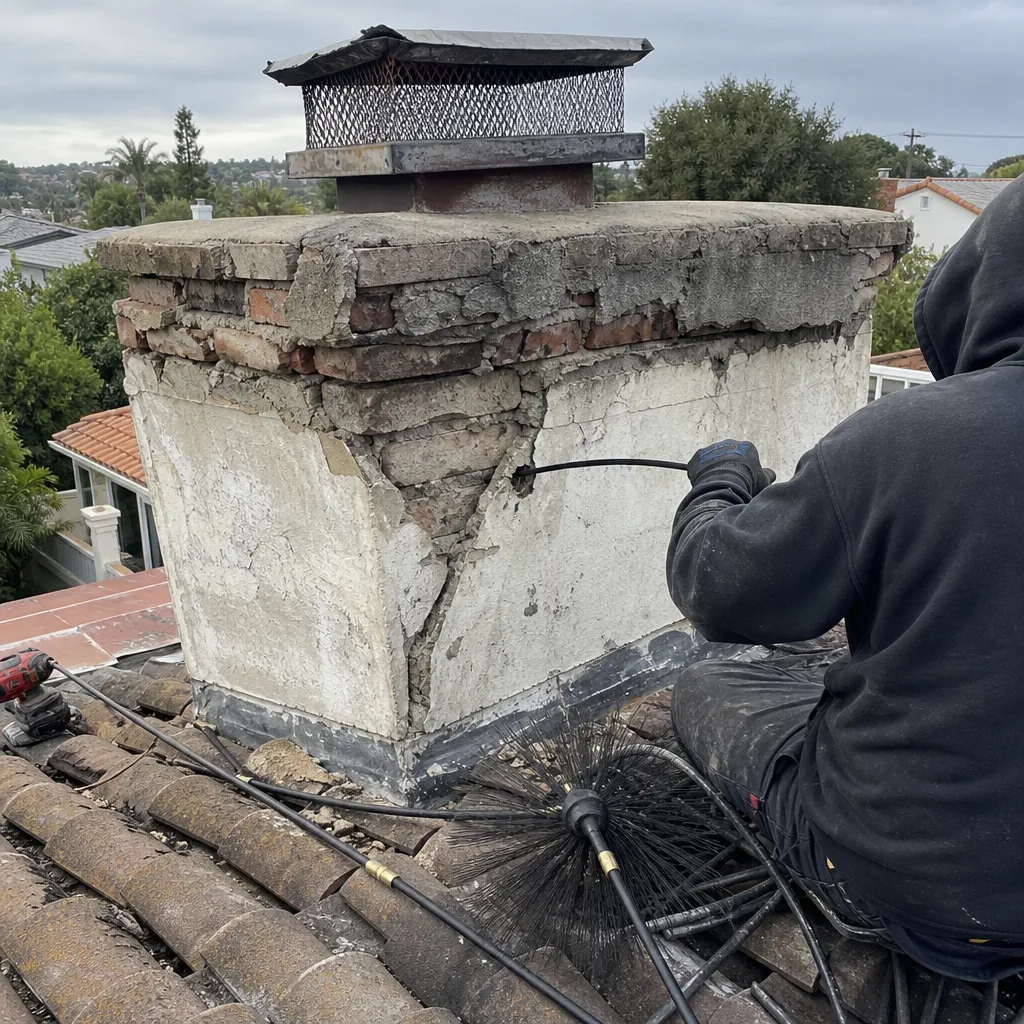 Before
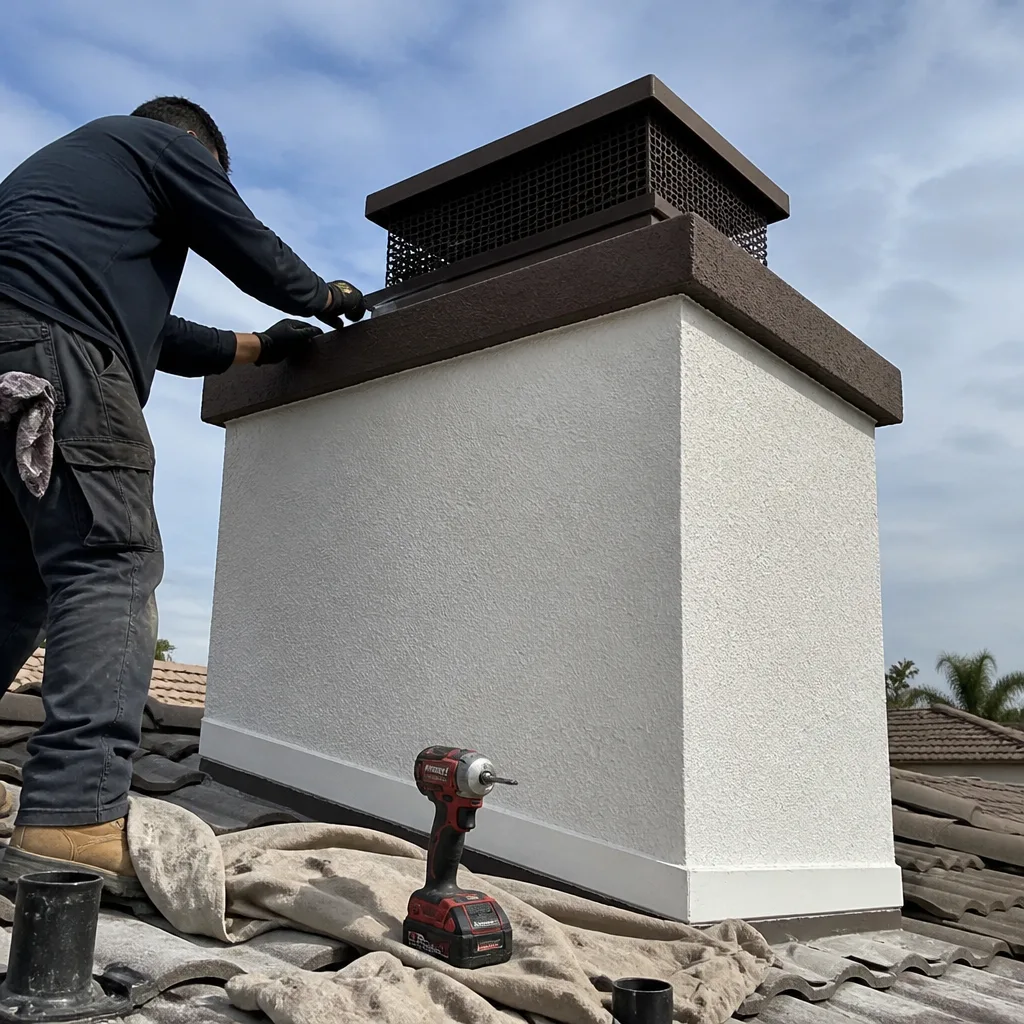 After
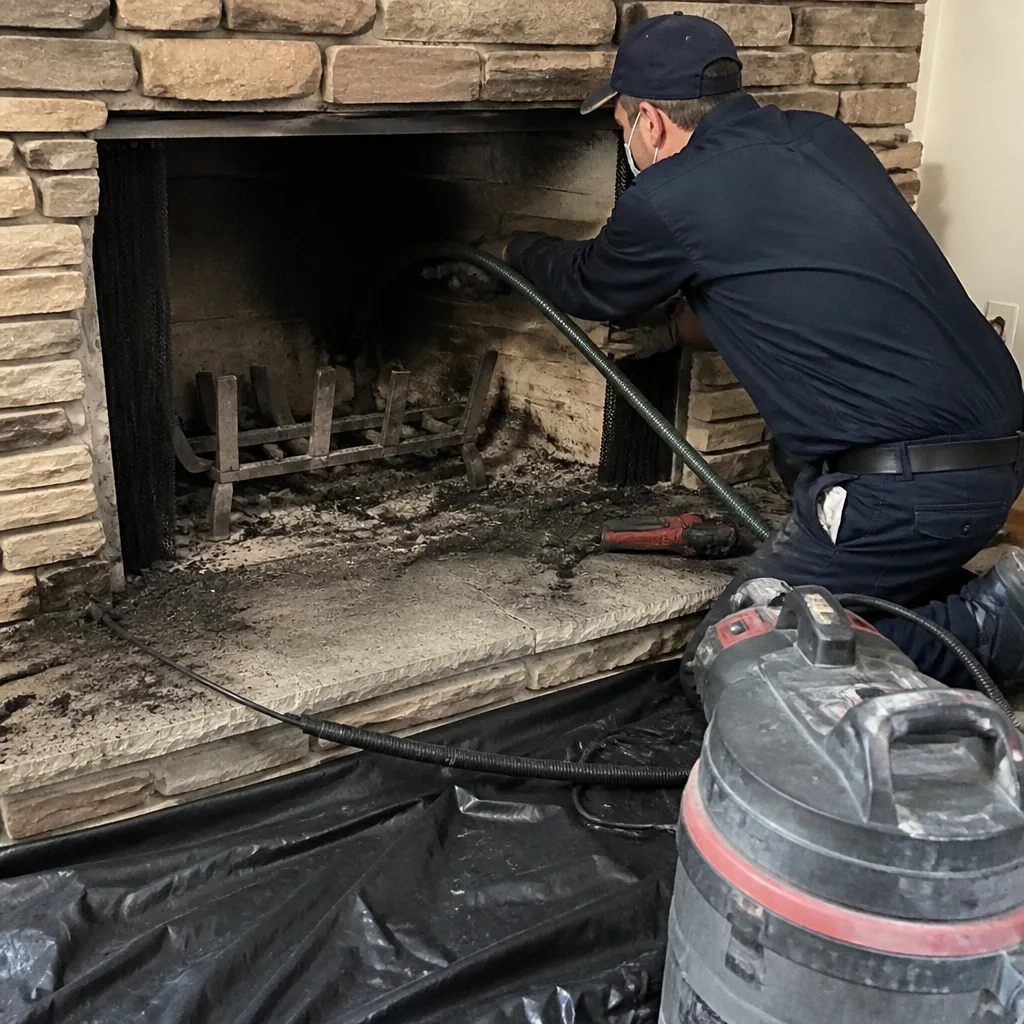 Before
 After
 Before
 After